
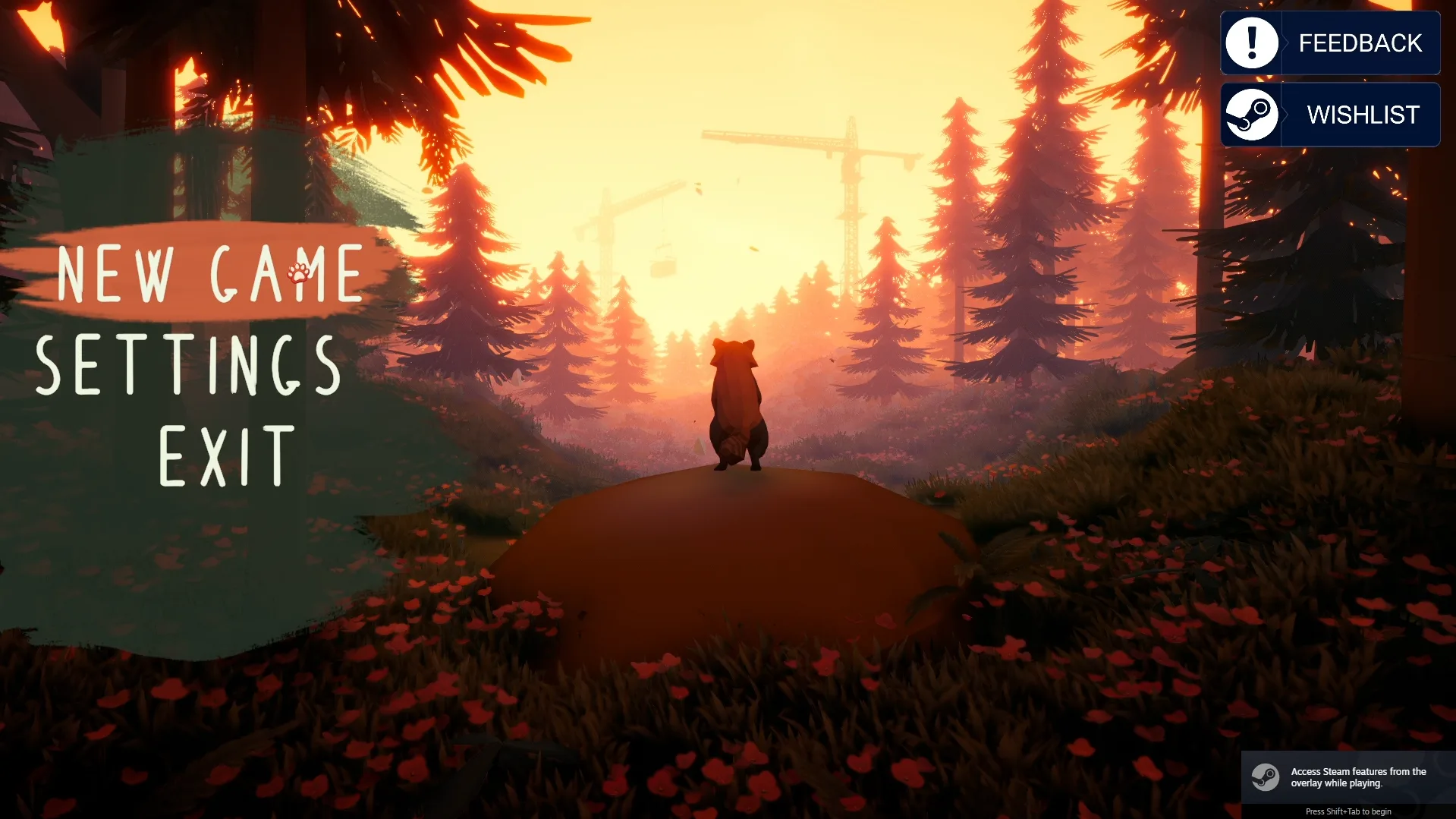
When the Embers Wake Review Details
This review is based on a pre-release development build of When the Embers Wake. As the game is not yet released, this review evaluates the version available to us and does not necessarily represent the final game.
| Time Spent | 1 Hour |
|---|---|
| Device | PC |
| Device Specs | Processor: AMD Ryzen 5 3600X 6-Core Processor (3.80 GHz) RAM: 16 GB GPU: NVIDIA GeForce RTX 3060 Ti |
| Writer Preferences | Action, JRPG, Tactics, Open-World |
Story & Narrative
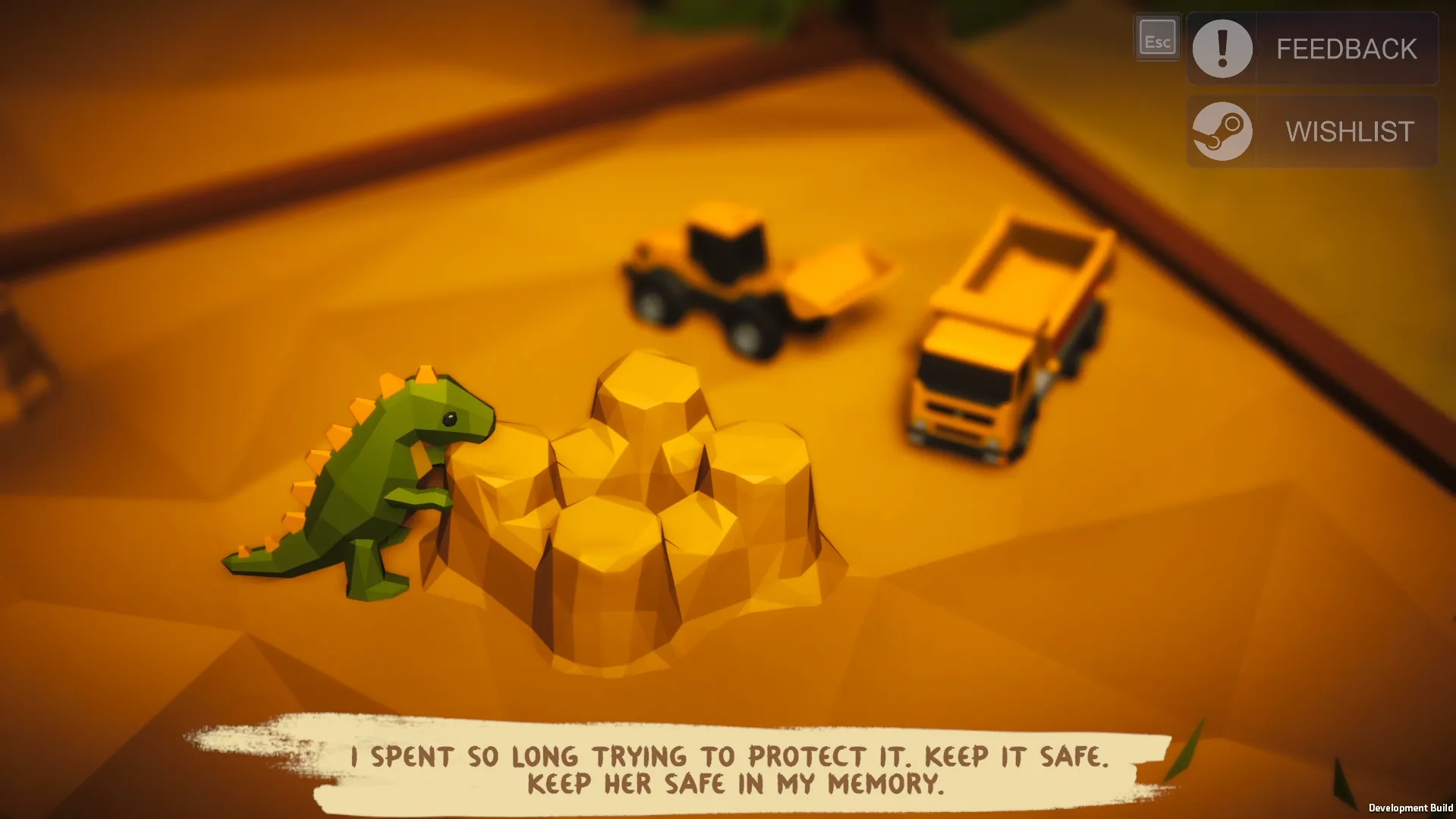
The story is the meat and potatoes of When the Embers Wake. The developers have positioned the game as a narrative experience, and the gameplay exists primarily to give the story a visual and interactive framework.
As the young red panda moves through the forest, Emmie recounts her experiences through narration. The player isn't simply following a character through a fictional world; they're gradually seeing the events being described unfold around them. A lot of the experience hinges on the player's emotional investment. Although the game is short and simple, the narrative expects the player to connect with what Emmie is describing and understand the emotions behind her experiences.
That emotional connection won't necessarily be the same for everyone. Players bring their own experiences and perspectives to a story, and When the Embers Wake leaves much of the emotional response in the player's hands. Even when I couldn't personally relate to everything Emmie experienced, I could still empathize with what she went through. For a narrative-focused game, that's an important distinction. The game doesn't need the player to have lived through the same experiences as its protagonist; it needs to give them enough context to understand them.
Gameplay & Exploration
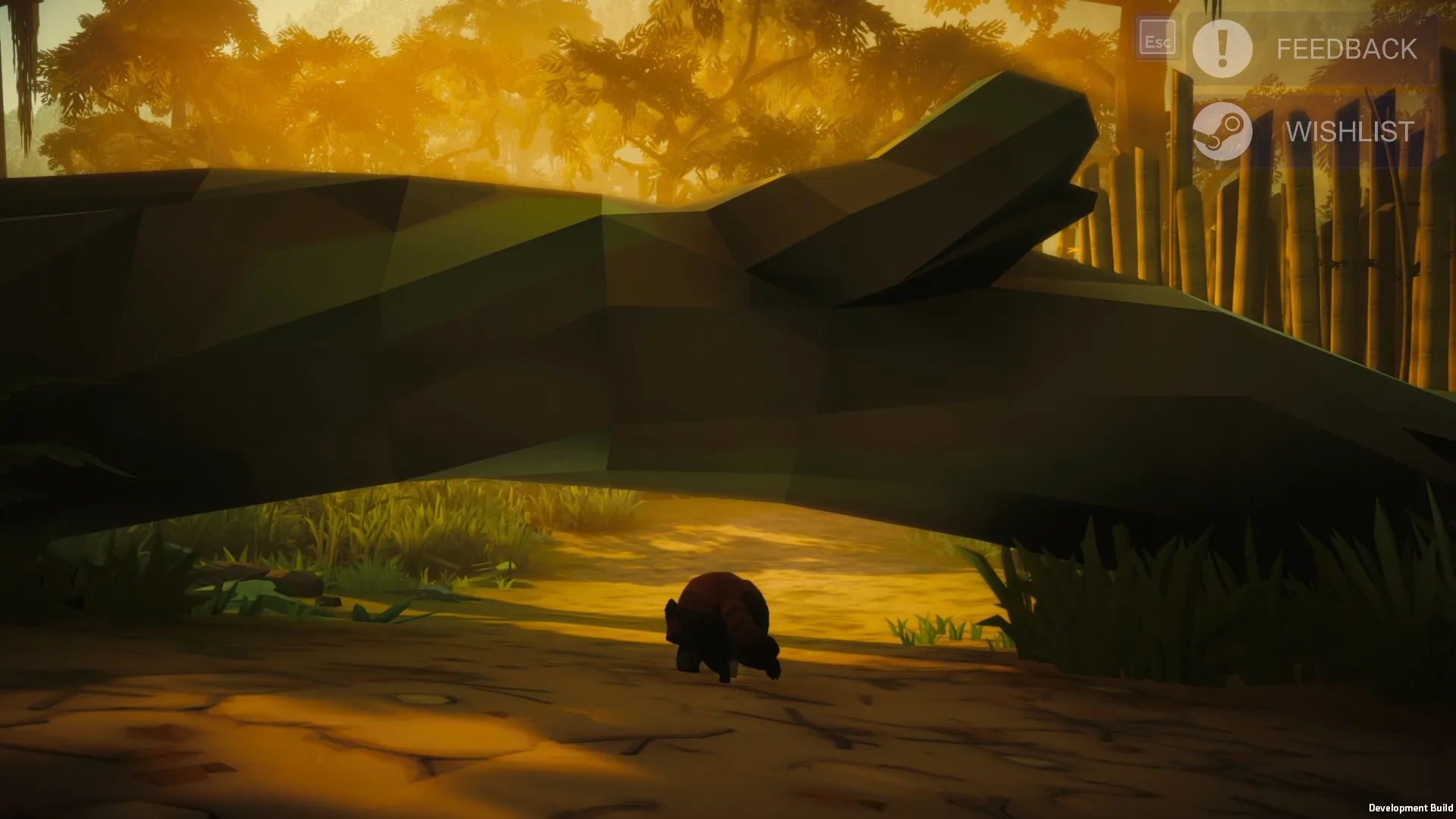
If you're looking for traditional exploration, puzzles, quick-time events, or challenging gameplay, When the Embers Wake isn't going to provide much of it.
There is no exploration in the classical sense. The player follows a largely straightforward path, and straying too far from it will generally result in running into an invisible barrier. There are also no puzzles to solve. For much of the experience, your primary actions amount to holding W and occasionally pressing E to interact with something.
That isn't necessarily a criticism of the game's design philosophy. When the Embers Wake clearly isn't trying to be the next Dark Souls. There are no QTEs to master or puzzles to solve because the focus is firmly on the story and the atmosphere.
Still, players who expect games to challenge them mechanically should adjust their expectations before starting. What is present works well enough. Movement is smooth, and the red panda feels responsive when moving through the environment. The controls aren't fighting for your attention, which is appropriate for a game whose primary focus is to let you absorb its narrative.
World & Environment
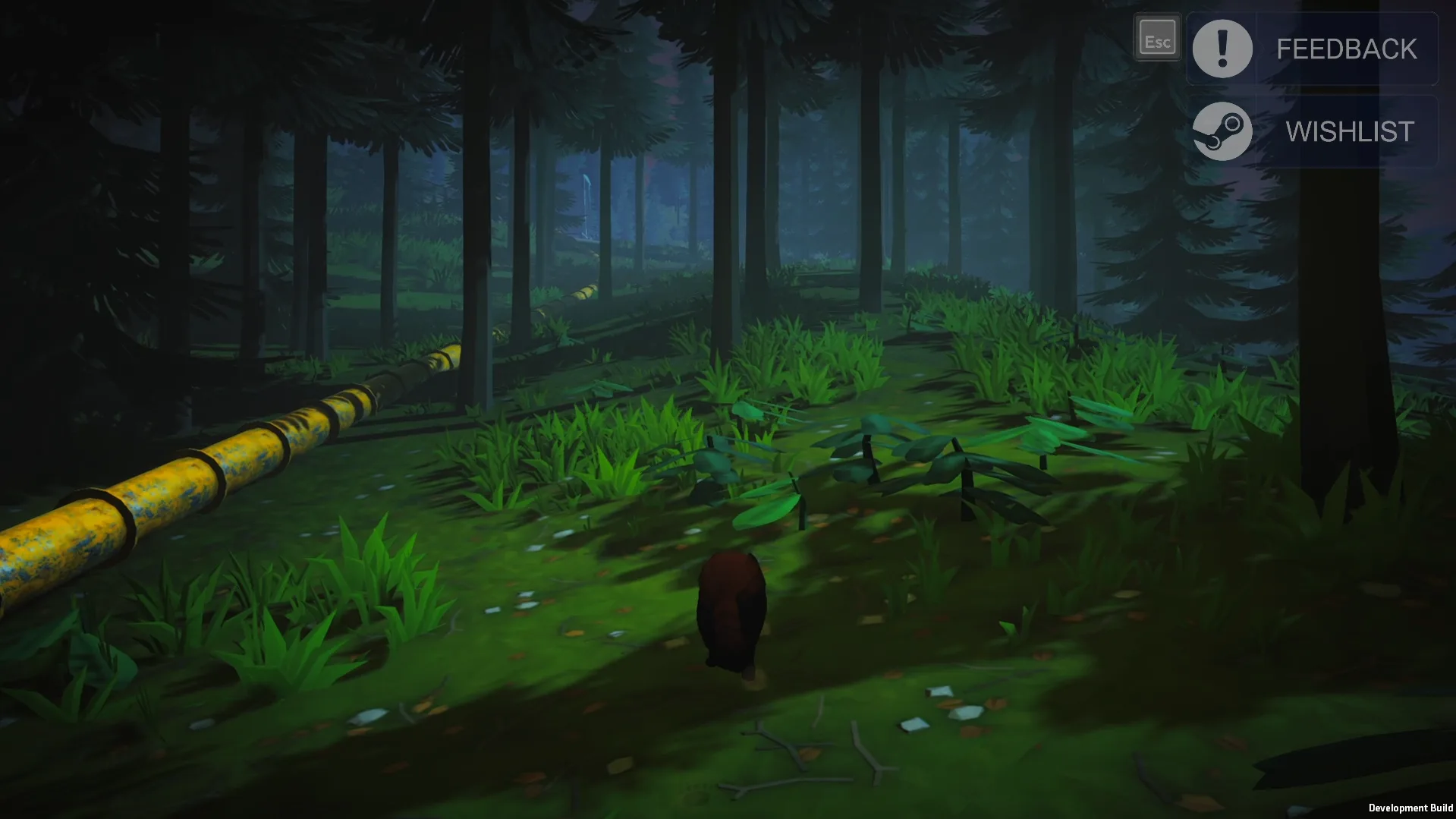
This is one of the areas where When the Embers Wake really shines.
Because Emmie's experiences are being communicated through narration, the game needs to visually communicate what is happening around the red panda. Fortunately, it does a surprisingly good job of guiding the player without constantly placing an objective marker in front of them.
There is no scent trail, floating waypoint, or obvious path indicator telling you exactly where to go. Yet, for the most part, you can tell where you're supposed to head.
A break in the trees, the geography of a hill, or even something as simple as a bright yellow pipe can serve as a visual cue that naturally draws your attention toward the next part of the experience.
This is particularly effective because the game doesn't make these elements feel like artificial game mechanics. They feel like natural parts of the environment.
The world also changes as the story progresses. When you eventually backtrack through areas you've already visited, you can see the impact of human activity beginning to take shape. Equipment appears, trees are cut down, and the environment gradually becomes a visual representation of the events Emmie is describing.
It is a simple technique, but it gives the world a sense of progression beyond simply moving from one level to the next.
Visuals & Art Direction
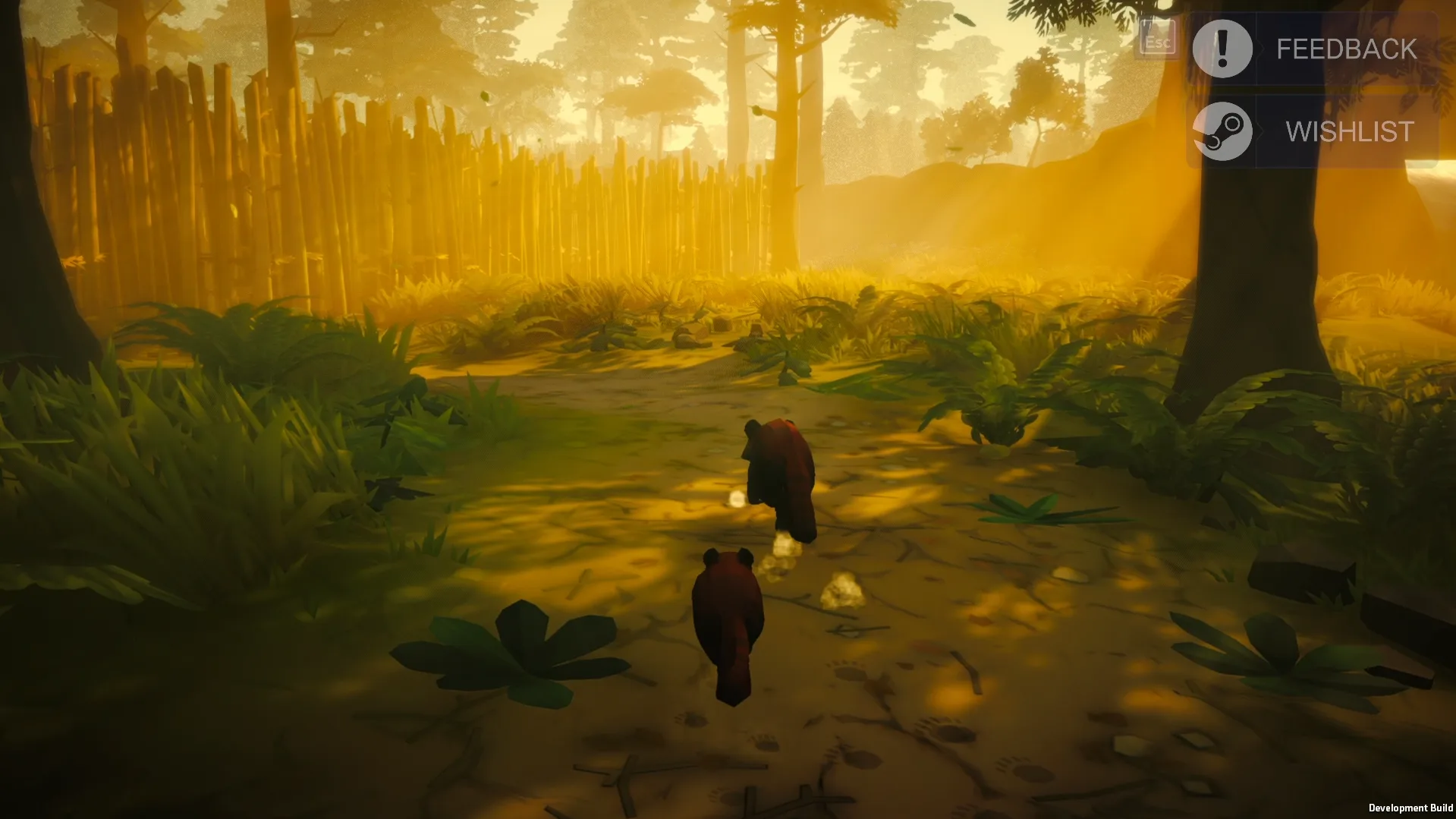
The low-poly art direction gives the twilight forest a distinctive character.
Rather than pursuing photorealism, When the Embers Wake uses simplified models and environments to create a stylized interpretation of its forest setting. The approach works particularly well with the game's atmosphere.
Sunbeams break through gaps in the trees and shrubbery, while the surrounding forest provides a subdued backdrop for Emmie's narration. The visual style isn't necessarily impressive in the traditional sense, but it gives the game its own identity.
More importantly, the visuals serve the narrative. The forest isn't just a backdrop for the red panda to walk through. Changes to the environment help communicate what is happening in Emmie's story.
Audio & Voice Acting
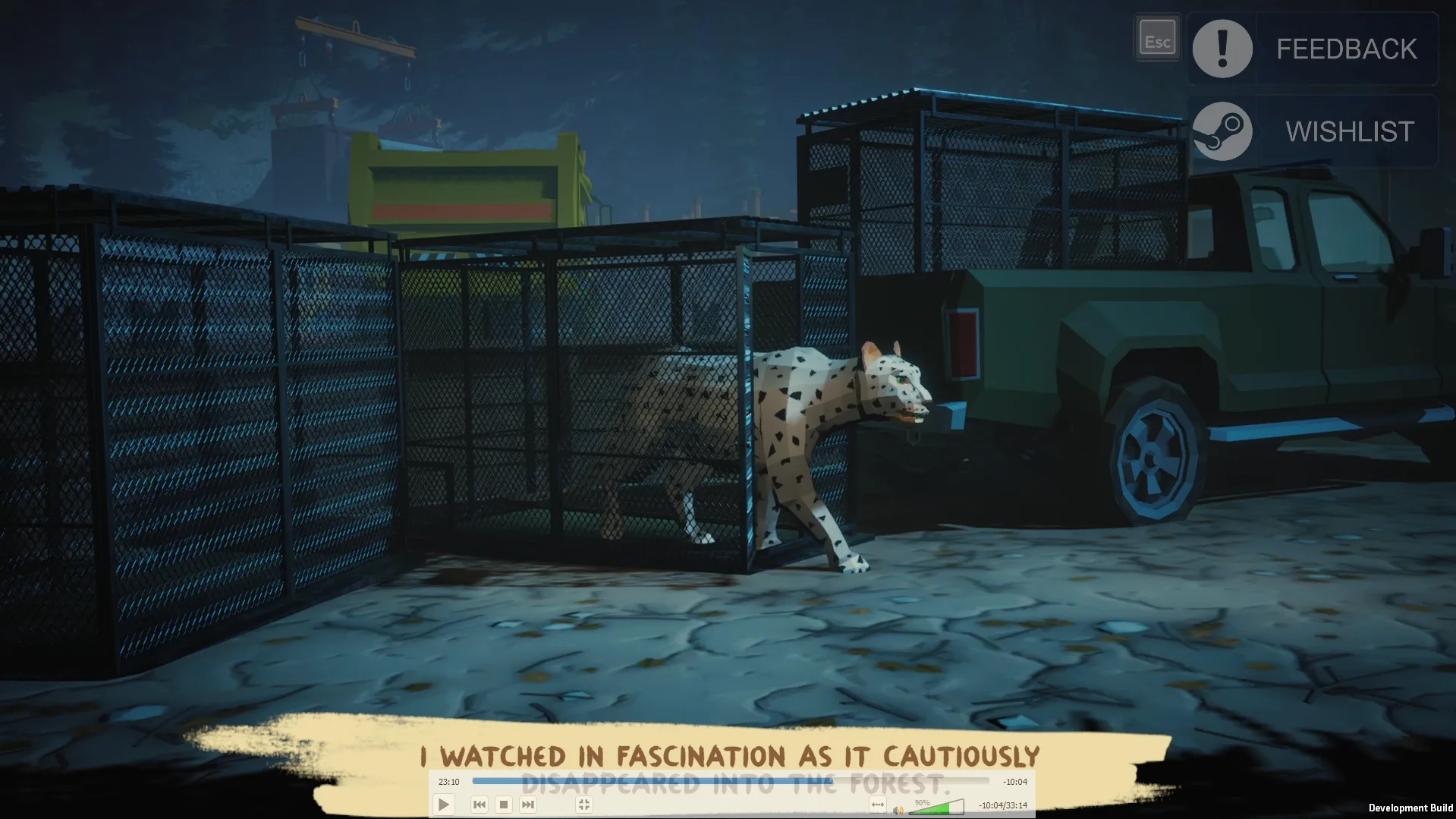
The music is somber and serene, fitting the game's reflective tone without demanding too much attention from the player.
The environmental audio works particularly well. Birds can be heard above as the red panda scurries across the forest floor, while the surrounding ambience gives the impression that the forest is alive.
There is just enough sound happening around you to make the environment feel inhabited without distracting from Emmie's narration.
Emmie's voice is a more complicated matter.
Llamaplay is transparent about the use of AI narration, and whether that is a significant issue will ultimately depend on the player's tolerance for it. For me, the results were mixed.
Emmie's delivery remains consistently slow and contemplative throughout the experience. This works particularly well for some of the more reflective dialogue, where the subdued delivery complements the game's atmosphere.
At other times, however, the lack of tonal variation makes the artificial nature of the voice acting apparent. After all, it can be difficult to relate to a voice that doesn't always convey the emotions behind the words. Those moments can pull you out of the experience, particularly during scenes where a stronger emotional shift in delivery would have helped.
The underlying music and environmental soundscape do a good job of establishing the mood, but the narration doesn't always reach the same level of immersion.
Performance & Technical Quality
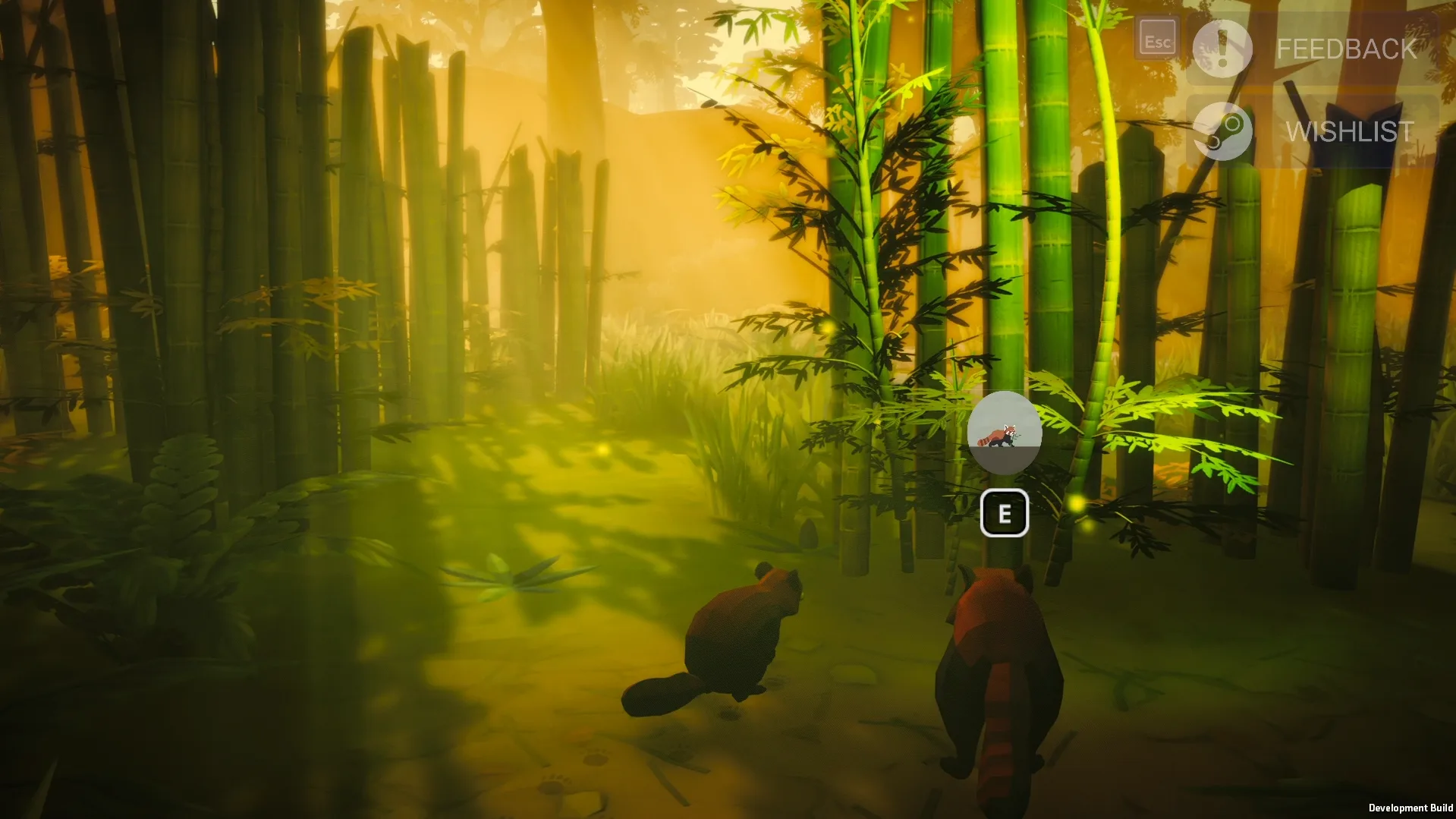
We played the development build on a system equipped with an RTX 3060 Ti, using the highest graphical settings available.
Throughout our time with the game, we encountered no noticeable stuttering, bugs, screen tearing, or other technical problems.
Movement remained responsive, and the game performed smoothly throughout the experience. Of course, this applies specifically to the build shared by Llamaplay. Performance and technical details can change before release, so this should not be interpreted as a guarantee of the final game's performance.
Final Verdict
7.5/ 10
When the Embers Wake knows what kind of experience it wants to provide.
It isn't trying to challenge you with difficult gameplay. It doesn't ask you to solve complicated puzzles, fight difficult enemies, or master intricate mechanics. Instead, it uses a simple interactive framework to tell a story about loss, change, and the experiences that shape us.
That approach won't appeal to everyone. Players who come to games looking for demanding combat, difficult puzzles, or a constant stream of mechanical challenges may find very little to sink their teeth into. Much of the game is simply moving forward and watching the story unfold.
But if you approach When the Embers Wake as a short narrative experience rather than a conventional game, its strengths become much clearer.
The environment does an effective job of communicating the story without constantly telling you where to look, while the low-poly art direction gives the forest a distinctive atmosphere. The music and environmental sounds complement the narration without overwhelming it, and the technical performance of the development build was excellent.
Most importantly, the game succeeds in giving its central story room to breathe. Even when I couldn't personally relate to everything Emmie experienced, the game gave me enough context to empathize with her and, in the process, look at loss from a different perspective.
When the Embers Wake won't satisfy players searching for a mechanical challenge. But for those willing to slow down and let a story unfold at its own pace — particularly players who find themselves able to connect with its themes of loss and change — it may be an experience worth keeping on their radar. After all, When the Embers Wake is intended to be felt rather than played.